
Fleas may be tiny, but they can quickly turn into a major problem inside your home. If you have pets, the risk is even higher, as fleas often hitch a ride on cats and dogs before spreading throughout your living space.
What makes fleas especially frustrating is how fast they reproduce. A small flea problem can turn into a full infestation in just a few weeks. You might notice your pet scratching more than usual or find small bites on your skin—but by then, fleas may already be hiding in carpets, furniture, and bedding.
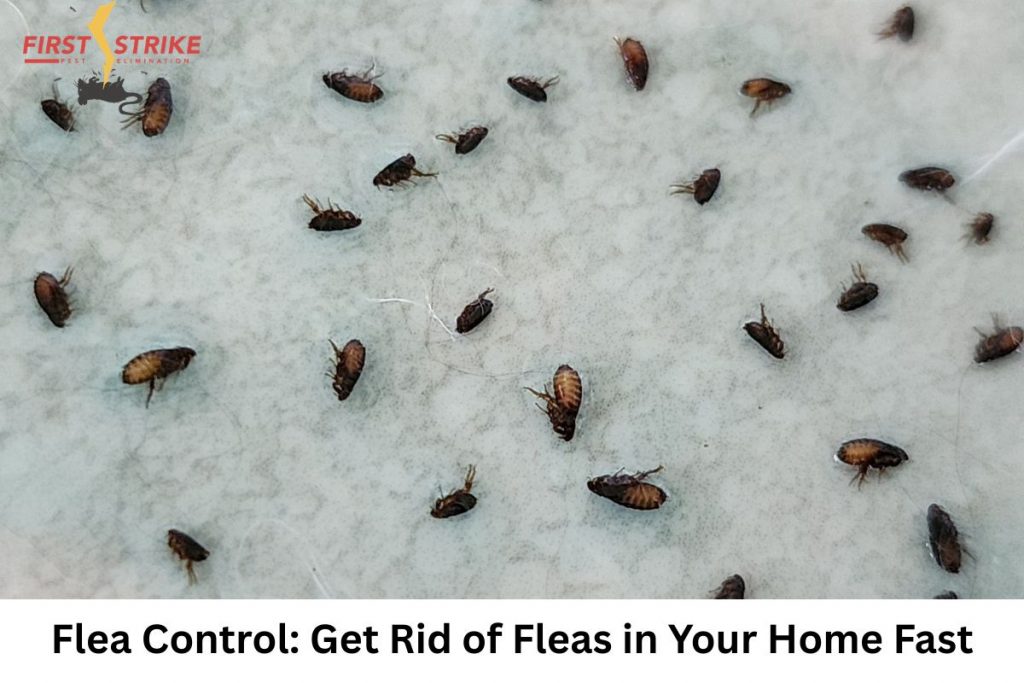
The challenge with flea control is that it’s not just about getting rid of adult fleas. Eggs and larvae can survive in hidden areas, making it difficult to eliminate the problem without the right approach.
In this guide, we’ll explain how fleas enter your home, how to identify an infestation, and how to get rid of them effectively—with expert help from First Strike Pest Elimination.
How Fleas Enter Your Home
Fleas don’t appear out of nowhere—they are usually brought in from outside.
The most common way fleas enter a home is through pets. Dogs and cats can pick up fleas from parks, yards, or contact with other animals. Once inside, fleas quickly spread to carpets, furniture, and bedding.
Fleas can also enter through clothing or second-hand items like rugs or furniture. Even if you don’t have pets, it’s still possible to bring fleas indoors unknowingly.
Outdoor areas can also play a role. If your yard has fleas, they can easily make their way inside through open doors or windows.
Understanding how fleas enter your home is the first step toward preventing future infestations.
Signs of a Flea Infestation
Fleas are small and fast-moving, so you may not always see them directly. However, there are several clear signs to watch for.
One of the most common signs is excessive scratching in pets. If your dog or cat is constantly itching, fleas may be the cause.
You might also notice small red bites on your skin, usually around the ankles or legs. These bites can be itchy and uncomfortable.
Another sign is flea dirt, which looks like tiny black specks on your pet’s fur or bedding. This is actually flea waste and is a strong indicator of an infestation.
In more severe cases, you may even see fleas jumping on carpets or furniture.
Why Fleas Are Hard to Eliminate
Fleas are difficult to control because of their life cycle. They go through four stages: egg, larva, pupa, and adult.
While adult fleas live on pets or in your home, eggs and larvae are often hidden in carpets, cracks, and furniture. This means that even if you kill the visible fleas, new ones can hatch later and restart the infestation.
Flea pupae are especially tough, as they can remain dormant for weeks before emerging as adults.
Because of this cycle, effective flea control requires a comprehensive approach that targets all life stages—not just the adults.
DIY Flea Control Methods
There are several steps you can take to reduce the number of fleas in your home.
Vacuuming regularly is one of the most effective methods. It helps remove fleas, eggs, and larvae from carpets and furniture. Be sure to empty the vacuum immediately after use.
Washing bedding, pet blankets, and fabrics in hot water can also help kill fleas and their eggs.
Treating your pets with flea-control products is essential to eliminate the source of the infestation.
However, while these methods can help reduce flea populations, they often don’t eliminate the problem—especially in larger infestations.
Professional Flea Control Solutions
For complete and long-lasting results, professional pest control is the best option. Experts like First Strike Pest Elimination use advanced treatments designed to eliminate fleas at every stage of their life cycle.
Professional treatments target not only adult fleas but also eggs and larvae hidden in your home. This ensures that the infestation is fully eliminated.
Specialized products are applied to carpets, furniture, and other affected areas, reaching places that DIY methods often miss.
In addition, professionals provide guidance on treating your pets and maintaining a flea-free environment.
Follow-up treatments may also be recommended to ensure that any remaining fleas are completely removed.
How to Prevent Fleas from Coming Back
Once you’ve eliminated fleas, prevention is key to avoiding future infestations.
Start by keeping your pets clean and using veterinarian-recommended flea prevention products.
Regular cleaning is also important. Vacuum carpets, rugs, and furniture frequently to remove any potential flea eggs.
Keep your yard well-maintained, as outdoor areas can harbor fleas. Trim grass and remove debris where fleas may hide.
Routine inspections and treatments from First Strike Pest Elimination can provide long-term protection and peace of mind.
When to Call the Experts
If fleas keep coming back despite your efforts, it’s time to call professionals.
Large infestations can be difficult to handle without the right tools and treatments.
With First Strike Pest Elimination, you get a complete solution that targets the root cause and keeps your home flea-free.
Conclusion
Fleas may be small, but they can cause big problems if left untreated. Their rapid reproduction and hidden life cycle make them among the most challenging pests to eliminate.
While DIY methods can help reduce the problem, they often fall short of providing a permanent solution.
For the best results, professional pest control services offer a comprehensive approach—eliminating fleas at every stage and preventing their return.
With expert help from First Strike Pest Elimination, you can protect your home, your pets, and your family from flea infestations.
FAQs
Yes, fleas can survive in carpets and furniture even without pets.
It can last several weeks if not treated properly.
Professional pest control combined with pet treatment is the most effective solution.
Yes, fleas can bite humans and cause itchy red marks.
Yes, companies like First Strike Pest Elimination use safe treatments when applied correctly.