Flies are one of the most common and annoying pests found in homes. Whether it’s a single fly buzzing around your kitchen or multiple flies gathering near trash bins, they can quickly become a frustrating problem.
But flies are more than just a nuisance. They can carry bacteria and germs from dirty surfaces and transfer them onto your food, countertops, and living spaces. This makes them a serious concern for hygiene and health.
The challenge with flies is that they reproduce quickly and are often attracted to everyday items like food and garbage. Many homeowners try sprays or traps, only to find that the flies keep coming back.
In this guide, we’ll explain why flies invade homes, how to control them effectively, and when to rely on professionals like First Strike Pest Elimination for long-lasting results.
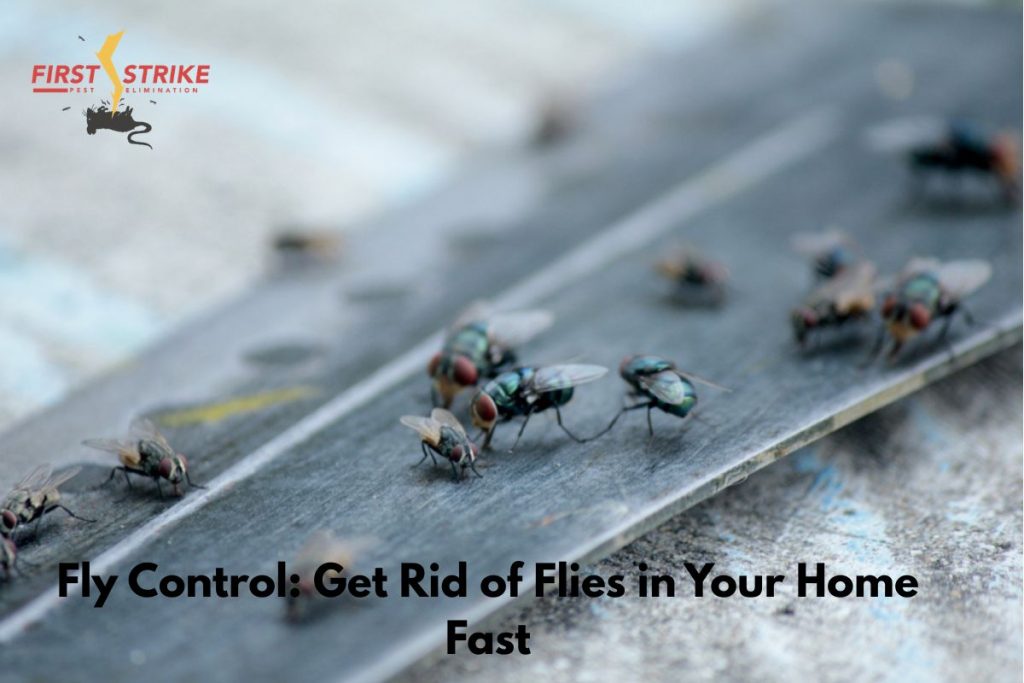
Why Flies Are a Problem
Flies may seem harmless at first, but they can pose real risks to your home and health.
They often land on garbage, waste, and other contaminated surfaces before entering your home. When they land on your food or kitchen surfaces, they can transfer bacteria and pathogens.
This can lead to food contamination and increase the risk of illness, especially in households with children or elderly individuals.
In addition to health risks, flies can also multiply quickly. A small problem can quickly turn into a larger infestation if not addressed properly.
Because of this, it’s important to take fly control seriously and act quickly.
What Attracts Flies to Your Home
Flies are attracted to environments where they can find food, moisture, and breeding areas.
Food is the biggest factor. Leftover food, crumbs, and uncovered dishes can easily attract flies. Even small spills or residues can draw them in.
Garbage is another major attraction. Trash bins, especially those without proper lids, can quickly become breeding grounds for flies.
Moisture also plays a role. Damp areas, drains, and standing water can attract certain types of flies.
Open doors and windows make it easy for flies to enter your home, especially during warmer months.
Common Types of Flies in Homes
Several types of flies commonly enter homes, and each has its own behavior.
House flies are the most common and are usually found around food and garbage.
Fruit flies are smaller and are attracted to ripe or decaying fruits and sugary substances.
Drain flies are often found near sinks, drains, and moist areas.
Identifying the type of fly can help determine the best method of control. This is something professionals at First Strike Pest Elimination handle during inspections.
Signs of a Fly Infestation
Sometimes flies are easy to spot, but other times the signs may be less obvious.
The most common sign is regularly seeing flies inside your home, especially in the kitchen or near trash areas.
You may also notice larvae (maggots) in garbage bins or decaying food, which indicates that flies are breeding.
Increased activity around windows or light sources is another sign, as flies are naturally attracted to light.
If you’re constantly dealing with flies despite cleaning, it may indicate a deeper issue.
DIY Fly Control Methods
There are several steps you can take to reduce fly activity in your home.
Start by maintaining cleanliness. Clean your kitchen regularly, wipe down surfaces, and avoid leaving food out.
Take out the trash frequently and use bins with tight-fitting lids.
Using fly traps or sticky strips can help catch flies and reduce their numbers.
Keeping doors and windows closed—or using screens—can also prevent flies from entering.
While these methods can help manage the problem, they may not eliminate it if flies are breeding nearby.
Professional Fly Control Solutions
For effective and long-term results, professional pest control is often the best solution. Experts like First Strike Pest Elimination use targeted treatments to eliminate flies at the source.
The first step is identifying breeding areas. Without removing these, flies will continue to return.
Professionals use specialized treatments to target both adult flies and larvae, ensuring complete control.
They also provide guidance on sanitation and prevention to reduce the chances of future infestations.
Regular treatments can keep your home fly-free, especially during peak seasons.
How to Prevent Flies from Coming Back
Prevention is essential for fly control.
Keep your home clean and free of food debris. Store food properly and clean up spills immediately.
Dispose of garbage regularly and keep bins sealed.
Clean drains and eliminate standing water to prevent breeding.
Install screens on windows and doors to block entry points.
For ongoing protection, many homeowners rely on routine services from First Strike Pest Elimination to maintain a pest-free environment.
When to Call the Experts
If flies keep returning despite your efforts, it’s time to call professionals.
Persistent infestations often indicate a hidden breeding source that needs to be addressed.
With First Strike Pest Elimination, you get expert solutions that not only eliminate flies but also prevent them from coming back.
Conclusion
Flies may seem like a small problem, but they can quickly become a major issue if not handled properly. Their ability to spread bacteria and reproduce quickly makes them a serious concern for any home.
While DIY methods can help reduce their numbers, they often don’t address the root cause.
For complete and long-lasting results, professional pest control is the most reliable option.
With expert help from First Strike Pest Elimination, you can enjoy a cleaner, healthier, and fly-free home.
FAQs
They are usually attracted to food, garbage, or hidden breeding areas.
Yes, they can spread bacteria and contaminate food.
Cleaning, removing breeding sources, and professional treatment are most effective.
They help reduce flies but don’t eliminate the source of the problem.
Yes, companies like First Strike Pest Elimination use safe and effective methods.