Wasps and bees play an important role in nature, but when they build nests near your home, they can quickly become a serious problem. Seeing them flying around your yard, roof, or entryways can be stressful—especially if you or your family members are concerned about stings.
Unlike many other pests, wasps can be aggressive and may attack if they feel threatened. A single nest can contain hundreds or even thousands of insects, making the situation dangerous if not handled properly.
While some homeowners attempt to remove nests themselves, this can be risky and often leads to painful stings or incomplete removal.
In this guide, we’ll explain how to identify wasp and bee activity, the risks involved, and the safest ways to deal with them—with professional help from First Strike Pest Elimination.
Difference Between Wasps and Bees
Although they may look similar, wasps and bees behave quite differently. Understanding this difference is important for proper control.
Bees are generally less aggressive and are important pollinators. They usually sting only when threatened.
Wasps, on the other hand, are more aggressive and can sting multiple times. They are also more likely to build nests around homes, such as under eaves, in attics, or inside wall voids.
Because of these differences, treatment methods vary depending on the type of insect. Professionals at First Strike Pest Elimination can accurately identify the species and choose the safest solution.
Why Wasps Build Nests Near Homes
Wasps are attracted to areas that provide shelter and easy access to food.
They often build nests in protected spaces like roof edges, wall cavities, garages, and trees. These areas keep them safe from weather and predators.
Food sources also play a role. Wasps are attracted to sugary drinks, food scraps, and even garbage.
During warmer months, their activity increases as colonies grow, which is why infestations are more common in spring and summer.
Understanding these factors can help reduce the chances of nests forming near your home.
Signs of a Wasp or Bee Infestation
One of the most obvious signs is increased activity. If you notice a large number of wasps flying around a specific area, there’s likely a nest nearby.
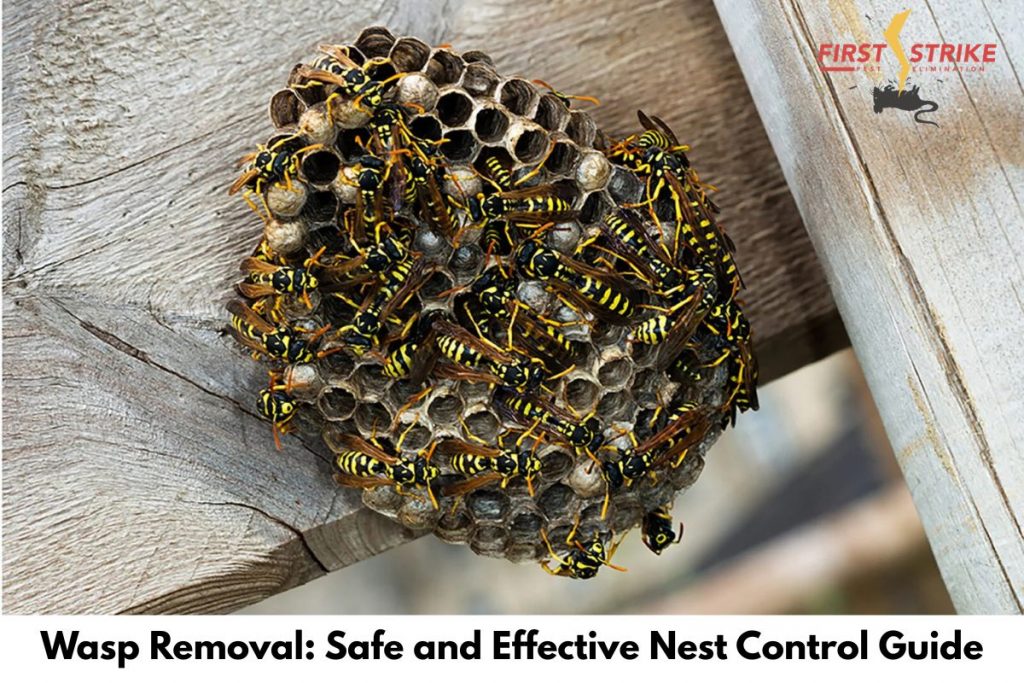
Visible nests are another clear sign. These can appear as paper-like structures (for wasps) or waxy hives (for bees).
You may also notice buzzing sounds coming from walls or ceilings, which could indicate a hidden nest.
In some cases, wasps may enter your home through small openings, especially if a nest is located inside the structure
Risks of Wasps and Bees
The biggest risk associated with wasps is their ability to sting multiple times. Unlike bees, which usually sting once, wasps can attack repeatedly.
Stings can be painful and may cause swelling, redness, and discomfort. For some individuals, allergic reactions can be severe and require medical attention.
Large nests increase the risk of multiple stings, especially if disturbed. This makes DIY removal particularly dangerous.
Because of these risks, it’s important to handle wasp infestations with caution and seek professional help when needed.
Why DIY Wasp Removal Is Dangerous
Many homeowners try to remove wasp nests themselves, but this can be extremely risky.
Disturbing a nest can trigger aggressive behavior, leading to multiple stings. Without proper protective equipment, this can result in serious injury.
DIY sprays may kill some wasps, but they often fail to eliminate the entire colony. Surviving wasps may rebuild the nest or relocate nearby.
Additionally, nests hidden inside walls or roofs are difficult to access without professional tools.
For these reasons, it’s always safer to rely on experts like First Strike Pest Elimination.
Professional Wasp & Bee Removal Solutions
Professional pest control services provide safe and effective removal of wasps and bees.
Experts at First Strike Pest Elimination start with a thorough inspection to locate nests and identify the type of insect.
They use specialized treatments to eliminate the colony while minimizing risk to your family.
Protective equipment and proper techniques ensure that nests are removed safely without triggering aggressive attacks.
In addition to removal, professionals also take steps to prevent future nesting in the same area.
How to Prevent Wasps from Returning
Prevention is key to avoiding future infestations.
Start by sealing cracks and gaps around your home to block entry points.
Keep outdoor areas clean and free of food waste. Make sure garbage bins are tightly sealed.
Inspect your home regularly, especially during warmer months, to catch early signs of nesting.
Removing small nests early can prevent larger problems later.
For ongoing protection, many homeowners choose routine services from First Strike Pest Elimination.
When to Call the Experts
If you see a wasp nest near your home or notice increased activity, it’s best to call professionals immediately.
Large nests or hidden infestations should never be handled without proper training and equipment.
With First Strike Pest Elimination, you get safe, fast, and reliable solutions that protect your home and family.
Conclusion
Wasps and bees may be a natural part of the environment, but they can become dangerous when they nest close to your home.
Understanding their behavior and recognizing the signs of an infestation can help you take action early.
While DIY methods may seem tempting, they often come with risks and limited effectiveness.
For safe and long-lasting results, professional pest control is the best choice.
With expert help from First Strike Pest Elimination, you can remove nests safely and enjoy peace of mind knowing your home is protected.
FAQs
Yes, wasps are generally more aggressive and can sting multiple times.
It is not recommended due to the risk of multiple stings.
Food, shelter, and warm environments attract wasps.
They can grow rapidly during warmer months.
Yes, companies like First Strike Pest Elimination use safe and effective methods.