
Spiders can be unsettling in any home, but choosing the right method to control them can make all the difference. Some homeowners prefer natural solutions to avoid chemicals, while others want fast, effective chemical treatments.
This guide is for homeowners and renters who want to understand the pros and cons of natural versus chemical spider control and choose the safest and most effective approach for their home.
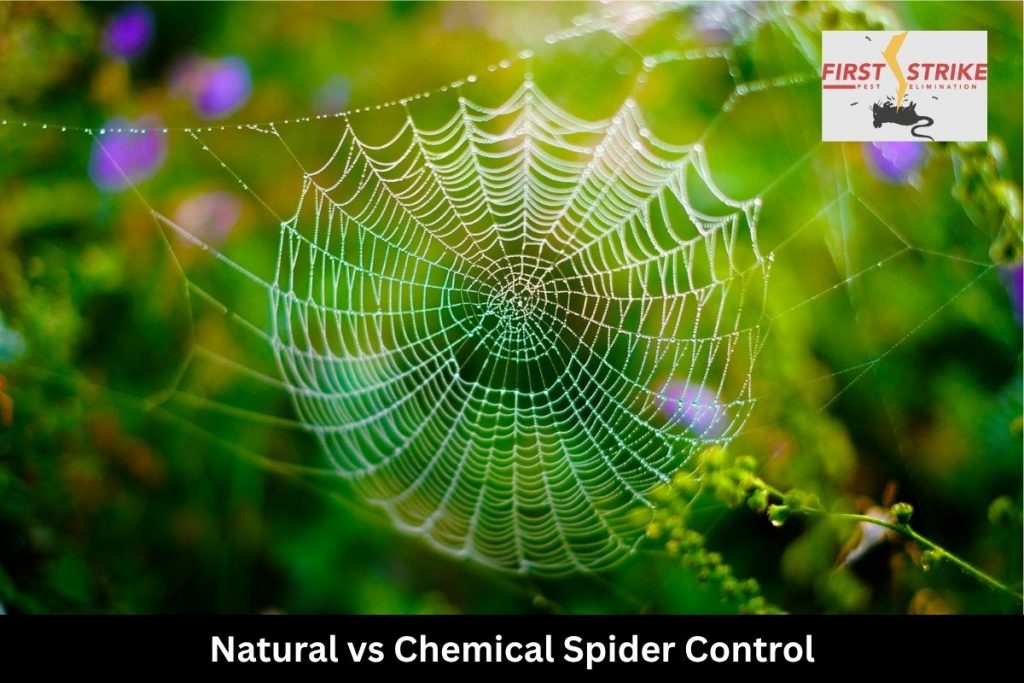
Understanding Spiders in Your Home
Spiders are beneficial in the outdoors because they eat insects, but inside your home, they can become pests. Common house spiders include:
- Common house spider – small webs in corners
- Cellar spider – long-legged, found in basements
- Wolf spider – larger and active hunters
Spiders usually enter homes seeking food, shelter, and dark, quiet spaces.
Natural Spider Control Methods
Natural spider control focuses on prevention and safe, chemical-free solutions.
1. Regular Cleaning
- Vacuum corners, behind furniture, and baseboards
- Remove webs regularly
- Keep cluttered areas organized
2. Essential Oils
Some oils repel spiders effectively:
- Peppermint oil
- Tea tree oil
- Eucalyptus oil
Mix with water and spray around windows, doors, and corners.
3. Physical Barriers
- Seal cracks and gaps around doors and windows
- Install door sweeps and window screens
- Close vents or use a fine mesh
4. Remove Their Food Source
Spiders eat other insects, so controlling pests helps reduce spider presence:
- Keep lights away from windows at night
- Remove other insects with traps or proper cleaning
5. Diatomaceous Earth
A natural powder that can be applied in areas where spiders travel. It:
- Damages exoskeletons
- Leads to dehydration
- It is safe for humans and pets
Chemical Spider Control Methods
Chemical treatments are designed for fast and effective spider elimination.
1. Insecticide Sprays
- Kill spiders on contact
- Can be used around corners and cracks
- Provide quick results
2. Residual Sprays
- Stay active on surfaces for weeks
- Kill spiders and other insects that walk over treated areas
3. Professional Pesticide Treatments
- Target hard-to-reach hiding spots
- Provide long-term control
- Often combined with inspection and preventive measures
Natural vs Chemical – Pros and Cons
| Method | Pros | Cons |
| Natural Methods | Safe for children/pets, eco-friendly | Slower results, requires regular effort |
| Chemical Methods | Fast, effective, long-lasting | Can be toxic, requires careful use |
Best Approach for Homeowners
A combined approach often works best:
- Use natural methods for prevention
- Apply chemicals strategically for large infestations
- Maintain cleanliness and seal entry points
Common Mistakes to Avoid
- Ignoring webs in hidden areas
- Overusing chemicals without proper safety
- Not addressing food sources (other insects)
- Delaying action until spiders multiply
When to Call Professional Help
Professional pest control is recommended if:
- Spider sightings are frequent
- Infestations involve large or venomous spiders
- DIY methods fail
- Multiple entry points make control difficult
Final Thoughts
Spiders are common indoors, but they can be managed effectively. Natural methods are safe and preventive, while chemical treatments provide fast, lasting results. Combining both approaches ensures your home stays spider-free without unnecessary risks.
Call to Action
If spiders keep appearing despite your efforts, contact First Strike Pest Elimination. Their professional team can assess your home, safely eliminate spiders, and prevent future infestations.
FAQs
Yes, they work well for prevention and small infestations, but require consistent effort.
When used as directed, they are effective, but care should be taken around children and pets.
Keep your home clean, remove webs, seal entry points, and reduce other insects.
Most house spiders are harmless. Bites are rare and typically mild.
Yes, if infestations are large, persistent, or involve potentially dangerous species.
Other insects, moisture, clutter, and dark spaces attract them.
Yes, oils like peppermint and tea tree can help repel spiders when sprayed in problem areas.