
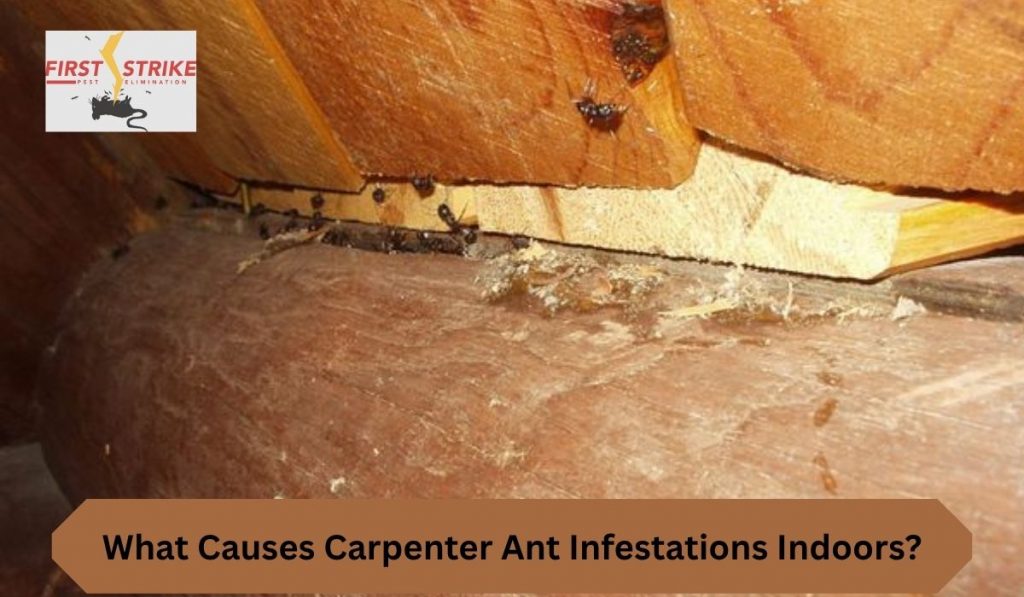
Carpenter ants can turn a quiet, comfortable home into a stressful place faster than most people expect. At first, you might notice a few large black ants wandering near your kitchen or bathroom. It doesn’t seem like a big deal. However, those few ants can be a warning sign of a much larger problem hiding inside your walls. Unlike termites, carpenter ants don’t eat wood, but they do carve through it to build their nests. Over time, this can lead to serious structural damage.
So, what causes carpenter ant infestations indoors? The answer is not just one thing. Instead, it’s a mix of conditions that make your home attractive and easy to invade. Moisture, food sources, hidden entry points, and neglected maintenance all play a role. The good news is that once you understand these causes, you can take smart steps to prevent or stop an infestation. Let’s break it all down in a simple, clear way.
Moisture Problems Invite Carpenter Ants Inside
Moisture is one of the biggest reasons carpenter ants move indoors. These ants prefer damp, soft wood because it is easier to tunnel through. If your home has water leaks, poor drainage, or high humidity, it creates the perfect environment for them to settle in.
For example, leaking pipes under sinks, damp basements, or poorly ventilated bathrooms can attract carpenter ants quickly. Even small issues like condensation around windows or clogged gutters can increase moisture levels. Over time, wood in these areas becomes soft, making it easier for ants to create galleries.
To reduce this risk, fix leaks as soon as possible and improve ventilation. Use exhaust fans in bathrooms and kitchens, and make sure your gutters are clean and working properly. Keeping your home dry is one of the most effective ways to prevent an infestation.
Food Sources Keep Carpenter Ants Coming Back
Carpenter ants may nest in wood, but they still need food to survive. Indoors, they are attracted to sweet and protein-rich foods. Crumbs on the floor, sticky counters, and unsealed food containers can quickly draw them in.
In many homes, the kitchen is the main target. However, pet food, garbage bins, and even sugary drinks left out overnight can also attract ants. Once they find a reliable food source, they will keep returning and may eventually build a nest nearby.
To prevent this, clean your home regularly. Wipe down surfaces, store food in airtight containers, and take out the trash often. Small habits like these make a big difference in keeping carpenter ants away.
Hidden Entry Points Make Access Easy
Carpenter ants are excellent at finding ways inside. Even tiny cracks or gaps can serve as entry points. Common areas include gaps around windows and doors, cracks in the foundation, and openings where utility lines enter your home.
Once inside, they explore quietly and look for suitable nesting areas. Because they are active at night, you may not notice them until the infestation has grown.
Sealing these entry points is essential. Use caulk to close cracks, install weather stripping, and inspect your home’s exterior regularly. By blocking their access, you make it much harder for carpenter ants to invade.
Nearby Trees and Wood Structures Increase Risk
Your outdoor environment can also contribute to indoor infestations. Trees, firewood, wooden fences, and decks near your home can act as starting points for carpenter ants. From there, they can easily move indoors.
Branches that touch your roof or siding act like bridges, giving ants direct access to your home. Similarly, storing firewood too close to your house increases the chances of ants moving inside.
To reduce this risk, trim tree branches away from your home and store firewood at least 20 feet away. Keeping a clean, well-maintained yard helps create a barrier against pests.
Damaged or Decaying Wood Attracts Colonies
Carpenter ants are drawn to wood that is already damaged. Rotting wood, water-damaged beams, and old structures provide the perfect nesting environment. These areas are easier to excavate, allowing ants to expand their colonies quickly.
You might find this type of wood around window frames, door frames, or roof edges. If left untreated, the problem can worsen as ants continue to expand their tunnels.
Regular home inspections can help you spot damaged wood early. Replace or repair any weakened areas to remove potential nesting sites. Strong, dry wood is far less attractive to carpenter ants.
Warm Indoor Conditions Support Infestations
Carpenter ants prefer warm environments, which makes indoor spaces ideal for them. Heated homes provide consistent temperatures, allowing colonies to thrive year-round.
During colder months, ants often move indoors to escape harsh weather. Once inside, they may establish satellite colonies in walls, ceilings, or hidden voids.
Maintaining a balanced indoor climate can help reduce this risk. While you cannot eliminate warmth entirely, combining temperature control with moisture reduction makes your home less inviting.
Satellite Colonies Spread the Problem
One of the most challenging aspects of carpenter ants is their ability to create multiple colonies. A main colony may exist outside, while satellite colonies develop indoors.
These smaller colonies do not require as much moisture, which makes them harder to detect. You might see ants in different areas of your home, even if the main nest is outside.
Because of this, simply killing visible ants is not enough. A complete solution requires locating and eliminating all colonies. Professional pest control services can help identify and treat both primary and satellite nests effectively.
Poor Maintenance and Delayed Action Worsen Infestations
Ignoring early warning signs can make a small issue turn into a major infestation. Carpenter ants often leave clues such as sawdust-like material (frass), rustling sounds inside walls, or discarded wings.
When these signs are overlooked, colonies have more time to grow and spread. Delayed action often leads to higher repair costs and more extensive damage.
Regular maintenance and quick response are key. The sooner you address the problem, the easier it is to control. Staying proactive protects both your home and your peace of mind.
Final Thoughts:
Carpenter ant infestations do not happen overnight. They develop because certain conditions make your home attractive and accessible. Moisture, food, entry points, and damaged wood all play a role. By addressing these factors, you can significantly reduce the risk of an infestation.
If you already notice signs of carpenter ants, it is important to act quickly. While DIY methods may offer temporary relief, professional treatment ensures complete removal and long-term protection. Don’t wait until the damage becomes serious—take action today and keep your home safe.
FAQs
What is the main cause of carpenter ants indoors?
Moisture-damaged wood is the primary cause. It provides an ideal environment for nesting and expansion.
Are carpenter ants dangerous to homes?
Yes, they can cause structural damage by tunneling through wood over time.
How do carpenter ants get inside?
They enter through cracks, gaps, and openings around windows, doors, and foundations.
Do carpenter ants eat wood like termites?
No, they do not eat wood. Instead, they carve it to create nests.
Can I get rid of carpenter ants myself?
You can reduce activity, but complete removal often requires professional treatment.
What time of year are carpenter ants most active?
They are most active in spring and summer but can remain active indoors year-round.
How can I prevent carpenter ants permanently?
Fix moisture issues, seal entry points, and keep your home clean and well-maintained.